Phone: 085912 91896 Email: info@spinespecialist.co.in

Minimally Invasive Spine Surgery in Mumbai
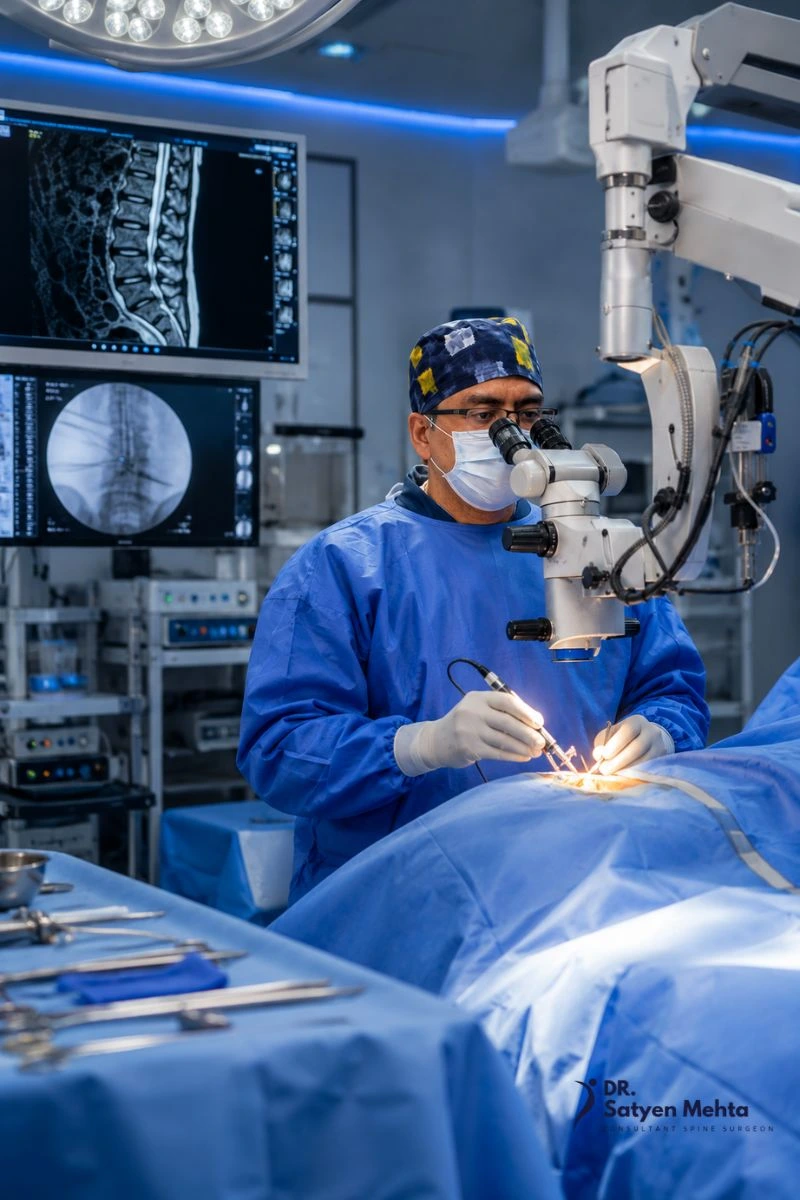
Advanced Spine Care by Dr Satyen Mehta
Back pain, neck pain, sciatica and nerve-related symptoms can significantly affect mobility, productivity and quality of life. While many spinal conditions improve with medication, physiotherapy, lifestyle modification or targeted injections, some patients continue to experience persistent pain, weakness or functional limitations despite appropriate conservative treatment.
For such patients, Minimally Invasive Spine Surgery (MISS) offers a modern surgical approach designed to treat spinal disorders with reduced disruption to normal muscles and tissues. By utilising specialised instruments, advanced imaging technologies and smaller surgical corridors, minimally invasive techniques can help achieve the goals of surgery while reducing postoperative discomfort and facilitating earlier recovery.
Dr Satyen Mehta is a spine surgeon in Mumbai with over 25 years of experience dedicated exclusively to the treatment of spinal disorders. His practice encompasses degenerative spine conditions, spinal deformities, spinal trauma, tumours, infections and osteoporosis-related disorders. Having trained extensively in India, South Korea and Australia, Dr Satyen Mehta incorporates contemporary minimally invasive, microscopic and fusion techniques into the treatment of suitable patients.
Dr Satyen Mehta is associated with Fortis Hospital, Mulund and S. L. Raheja Hospital, Mumbai, where he manages a wide spectrum of spinal conditions ranging from common degenerative disorders to complex spinal pathology.
What is Minimally Invasive Spine Surgery?
Minimally Invasive Spine Surgery refers to a group of surgical techniques that allow surgeons to access and treat spinal disorders through smaller incisions while minimising damage to surrounding muscles, ligaments and soft tissues.
Traditional spine surgery often requires extensive muscle dissection to expose the spine. While highly effective when indicated, these procedures may be associated with greater tissue disruption and longer recovery periods. Minimally invasive techniques aim to reduce this collateral tissue injury without compromising surgical objectives.
Modern minimally invasive procedures utilise technologies such as:
- High-definition endoscopic systems
- Surgical microscopes
- Tubular retractors
- Navigation-guided imaging
- Real-time intraoperative imaging
- Specialised minimally invasive instrumentation
These technologies enable precise treatment of spinal disorders while preserving normal anatomy wherever possible.
The objective of minimally invasive spine surgery is not simply to create a smaller skin incision. The true goal is to achieve effective decompression, stabilisation, or correction of spinal pathology while minimising surgical trauma.
Why Experience Matters in Minimally Invasive Spine Surgery
Minimally invasive spine surgery has a significant learning curve. Success depends not only on technology but also on surgical judgment, patient selection and technical expertise.
Dr Satyen Mehta has over 25 years of experience in spine surgery and has undergone advanced training in spinal surgery across multiple international centres.
He is a Gold Medalist in M.S. Orthopaedics and has been awarded the degree of Member of the Royal College of Surgeons (MRCS), Glasgow, United Kingdom.
His international training includes:
- Fellowship in Spinal Deformity Corrective Surgery and Paediatric Spine Surgery at Korea University Guro Hospital, Seoul, South Korea
- Advanced spine surgery training in Australia
- Clinical experience at Princess Alexandra Hospital, Brisbane, Australia
- Specialised training in minimally invasive spine techniques
In addition to clinical practice, Dr Satyen Mehta remains actively involved in teaching, research and academic development of spine surgery. He has published research in international journals, presented at national and international conferences and continues to train young spine surgeons through fellowship programmes. Young spine surgeons from across India and neighbouring countries undergo fellowship training under his guidance.
His involvement with organisations such as the Association of Spinal Surgeons of India, Bombay Orthopaedic Society and Bombay Spine Society reflects a long-standing commitment to advancing spine care and education.
Benefits of Minimally Invasive Spine Surgery
When appropriately indicated, minimally invasive spine surgery may offer several advantages compared to traditional open procedures.
Reduced Muscle Injury
Traditional surgical exposure may require detachment or prolonged retraction of spinal muscles. Minimally invasive techniques are designed to work through natural tissue planes, reducing muscle disruption.
Smaller Incisions
Smaller skin incisions often result in reduced soft tissue trauma and less scarring.
Less Blood Loss
Because of reduced tissue dissection, blood loss during surgery is often lower in appropriately selected cases.
Reduced Postoperative Pain
Many patients experience less postoperative discomfort compared with traditional open procedures.
Earlier Mobilisation
Patients are often able to walk within hours of surgery or on the following day.
Shorter Hospital Stay
Many minimally invasive procedures require shorter hospitalisation compared to conventional approaches.
Faster Return to Daily Activities
Recovery timelines vary according to the procedure performed, but many patients return to routine activities sooner.
Conditions Commonly Treated Using Minimally Invasive Spine Surgery
Slip Disc (Disc Herniation)
A slipped disc occurs when disc material protrudes and compresses nearby nerves. Symptoms may include back pain, sciatica, numbness, tingling and weakness. When symptoms persist despite non-surgical treatment, minimally invasive procedures such as microdiscectomy or endoscopic discectomy may be considered.
Sciatica
Sciatica refers to pain radiating from the lower back into the buttock, thigh or leg due to nerve compression. Disc herniation, spinal stenosis and foraminal narrowing are common causes. Minimally invasive decompression procedures can relieve pressure on the affected nerve.
Spinal Stenosis
Spinal stenosis occurs when narrowing of the spinal canal compresses the nerves. Patients often experience leg pain while walking, heaviness in the legs and reduced walking tolerance. Minimally invasive decompression techniques can create additional space for the nerves while preserving stability.
Cervical Radiculopathy
Compression of nerves in the neck may lead to pain radiating into the shoulder, arm or hand. Persistent symptoms that fail conservative treatment may require minimally invasive cervical procedures.
Spondylolisthesis
Spondylolisthesis occurs when one vertebra slips relative to another. Symptoms may include back pain, nerve compression and walking difficulties. Minimally invasive fusion procedures can help restore stability in selected patients.
Degenerative Disc Disease
Age-related disc degeneration may contribute to chronic pain, instability and nerve compression. Some patients may benefit from minimally invasive decompression or fusion procedures when non-operative treatments are no longer effective.
Advanced Technologies Used by Dr Satyen Mehta
Endoscopic Spine Surgery
Endoscopic spine surgery represents one of the most significant advances in modern spinal care. Using a high-definition camera and specialised instruments introduced through a small incision, surgeons can directly visualise and treat the source of nerve compression.
Endoscopic techniques are commonly used for selected disc herniations, sciatica and nerve compression syndromes. The approach minimises disruption to normal tissues and often allows for quicker postoperative recovery.
Microscopic Spine Surgery
Microscopic spine surgery utilises an operating microscope that provides magnified visualisation of delicate neural structures.
Enhanced visibility allows greater precision during decompression procedures and helps protect surrounding nerves and tissues. Microscopic techniques remain an important component of modern minimally invasive spine surgery.
Navigation-Guided Spine Surgery
Navigation systems provide real-time three-dimensional imaging during surgery. These systems help improve accuracy in spinal instrumentation and assist surgeons in planning implant placement.
Navigation-guided surgery can be particularly valuable during minimally invasive fusion procedures where precise screw placement is essential.
Modern Imaging and Precision Instrumentation
Advanced imaging, specialised retractors and dedicated minimally invasive instruments allow surgeons to perform complex spinal procedures through smaller surgical corridors while maintaining accuracy and safety.
Minimally Invasive Spine Procedures Performed by Dr Satyen Mehta
Endoscopic Discectomy
This procedure removes the portion of a slipped disc that is compressing a nerve. It is commonly performed for patients with persistent sciatica caused by lumbar disc herniation.
Microdiscectomy
Microdiscectomy is one of the most successful procedures for relieving nerve compression due to disc herniation. Using magnification and minimally invasive techniques, the offending disc fragment is removed while preserving surrounding structures.
Minimally Invasive Decompression
Decompression surgery is performed to relieve pressure on spinal nerves affected by stenosis or degenerative changes.
Minimally Invasive Lumbar Fusion
Fusion procedures may be recommended when spinal instability contributes to symptoms. Techniques such as minimally invasive transforaminal lumbar interbody fusion (MI-TLIF) allow stabilisation through smaller incisions with reduced tissue disruption.
Lateral Lumbar Interbody Fusion (LLIF)
LLIF is a side-approach fusion technique used in selected patients with degenerative conditions, deformity or instability. It provides access to the spine while minimising disruption of posterior spinal muscles.
Vertebroplasty and Kyphoplasty
These procedures are used in selected osteoporotic vertebral fractures to reduce pain and improve stability.
Who Is a Candidate for Minimally Invasive Spine Surgery?
Patients may be considered for minimally invasive spine surgery when:
- Symptoms persist despite appropriate conservative treatment
- Pain significantly affects daily activities
- Progressive weakness develops
- Walking tolerance becomes limited
- Nerve compression is clearly demonstrated on imaging
- Quality of life is significantly impaired
A detailed clinical evaluation is necessary before determining whether surgery is appropriate.
When Should Surgery Be Considered?
Surgery is generally considered when non-operative treatment fails to provide satisfactory relief or when neurological function is threatened.
Situations where surgery may be recommended include:
- Persistent severe pain
- Progressive weakness
- Significant nerve compression
- Spinal instability
- Loss of functional independence
- Certain spinal tumours, infections or fractures
The decision is individualised and based on symptoms, examination findings and imaging studies.
When Is Surgery Not Necessary?
Many spinal conditions improve without surgery. Dr Satyen Mehta believes in selecting treatment strategies based on individual patient requirements rather than recommending surgery as a first-line solution.
Non-operative treatment options may include:
- Physiotherapy
- Structured exercise programmes
- Postural correction
- Medications
- Lifestyle modification
- Nerve root injections
- Facet joint injections
Surgery is considered only when it is likely to provide the safest and most effective outcome.
Why Choose Minimally Invasive Spine Surgery?
Smaller Incisions
Reduced tissue disruption.
Less Muscle Damage
Muscles are preserved as much as possible.
Reduced Blood Loss
Lower blood loss in many procedures
Shorter Hospital Stay
Many patients go home sooner.
Earlier Recovery
Faster return to routine activities for suitable patients.
Comparable Surgical Goals
Treatment objectives remain the same when patients are appropriately selected.
While minimally invasive techniques offer several advantages for suitable patients, open spine surgery remains the preferred approach for certain complex conditions. The choice of procedure is based on your diagnosis, spinal anatomy and treatment goals.
Timeline
Recovery After Minimally Invasive Spine Surgery
Recovery varies depending on the procedure performed and the patient’s overall health.
General recovery milestones include:
Day 1
Most patients begin walking.
First Two Weeks
Gradual return to light daily activities.
Four to Six Weeks
Improvement in comfort and mobility continues.
Six to Twelve Weeks
Progressive return to normal activities depending on the procedure and recovery progress.
Physiotherapy and rehabilitation remain important components of recovery.
Risks and Complications
All surgical procedures carry potential risks.
These may include:
- Infection
- Bleeding
- Nerve injury
- Dural tear
- Recurrent disc herniation
- Implant-related complications
- Anaesthesia-related complications
Dr Satyen Mehta discusses risks and expected outcomes in detail during consultation so that patients can make informed treatment decisions.
Why Choose Dr Satyen Mehta?
- Over 25 years of experience dedicated exclusively to spine disorders
- Gold Medalist in Orthopaedics
- MRCS (Glasgow, United Kingdom)
- International training in South Korea and Australia
- Fellowship-trained in spinal deformity and paediatric spine surgery
- Expertise in minimally invasive and microscopic spine surgery
- Active researcher, educator and fellowship mentor
- Evidence-based and patient-centred treatment philosophy
- Comprehensive management of both simple and complex spinal disorders
Frequently asked questions about Minimally Invasive Spine Surgery
How Do I Know If I Need Spine Surgery?
Most patients with back pain, neck pain or sciatica do not require surgery. Surgery may be considered when symptoms persist despite appropriate non-surgical treatment, when pain significantly affects quality of life, or when there is progressive weakness, numbness or difficulty walking. A detailed clinical evaluation and review of imaging studies help determine whether surgery is necessary.
What Is the Difference Between Endoscopic Spine Surgery and Minimally Invasive Spine Surgery?
Minimally invasive spine surgery is a broad term that includes several techniques designed to reduce tissue disruption during surgery. Endoscopic spine surgery is one type of minimally invasive surgery that uses a high-definition camera and specialised instruments introduced through a very small incision. The most appropriate technique depends on the underlying spinal condition and treatment goals.
Can Minimally Invasive Spine Surgery Help Avoid a Large Operation?
In many patients, minimally invasive techniques can achieve the same surgical objectives as traditional open surgery while reducing muscle injury and shortening recovery time. However, not every spinal condition can be treated using minimally invasive methods. The choice of surgical approach depends on the nature and complexity of the problem being treated.
What Happens If I Delay Spine Surgery?
The answer depends on the underlying condition. Some spinal disorders can be managed safely with observation and non-surgical treatment. However, persistent nerve compression may sometimes lead to worsening pain, weakness or loss of function. If surgery has been recommended, it is important to discuss the potential benefits and risks of delaying treatment with your spine surgeon.
Is Minimally Invasive Spine Surgery Painful?
Patients generally experience postoperative discomfort after any surgery. However, because minimally invasive techniques are designed to reduce tissue disruption, many patients report less postoperative pain and an earlier return to daily activities compared with traditional open procedures.
Centers