Phone: 085912 91896 Email: info@spinespecialist.co.in

Slipped Disc Treatment in Mumbai
Expert Diagnosis and Personalised Treatment for slipped disc by Dr Satyen Mehta
Spine Surgeon | 25+ Years of Experience | Consultation Locations: Chembur | Khar | Mulund
Back pain that radiates into the leg, persistent neck pain travelling to the arm, numbness, tingling, or muscle weakness may be signs of a slipped disc. Also known as a herniated disc or prolapsed disc, this condition occurs when one of the cushioning discs between the vertebrae presses on a nearby spinal nerve, causing pain and neurological symptoms.
The good news is that most slipped discs do not require surgery. Many patients improve with a combination of medication, physiotherapy, activity modification and time. When symptoms persist despite appropriate conservative treatment or significant nerve compression develops, advanced surgical techniques such as endoscopic spine surgery or minimally invasive spine surgery may be recommended.
Dr Satyen Mehta is a dedicated spine surgeon in Mumbai with over 25 years of experience in treating cervical, thoracic and lumbar spinal disorders. Every patient undergoes a thorough clinical assessment and detailed review of imaging before an individualised treatment plan is recommended. The objective is always to relieve pain, restore function and choose the least invasive treatment that provides the best long-term outcome.
What is a Slipped Disc?
The spine is made up of a series of bones called vertebrae, separated by intervertebral discs that act as natural shock absorbers. Each disc has a tough outer layer (annulus fibrosus) surrounding a soft gel-like centre (nucleus pulposus).
A slipped disc occurs when the outer layer weakens or tears, allowing part of the inner material to bulge or protrude outward. When this herniated disc compresses a nearby spinal nerve or the spinal cord, it can lead to pain, numbness, tingling or weakness depending on the level of the spine involved.
Although commonly referred to as a “slipped disc,” the disc does not actually slip out of place. The more accurate medical terms include disc herniation, prolapsed disc, or herniated intervertebral disc.
Slipped discs most commonly occur in:
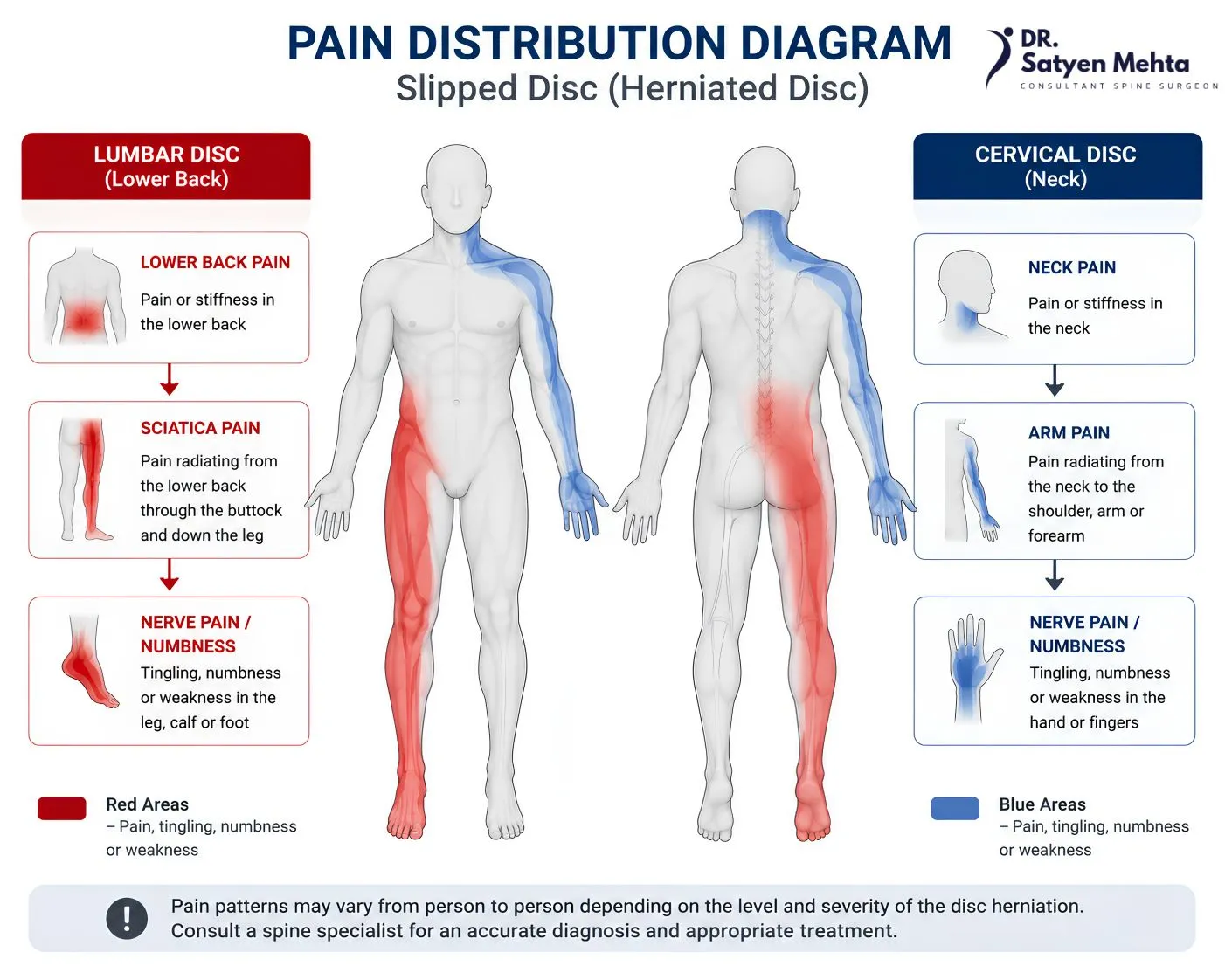
- Lumbar Spine (Lower Back): Often causing lower back pain, sciatica and leg symptoms.
- Cervical Spine (Neck): Frequently associated with neck pain radiating to the shoulder, arm or hand.
- Thoracic Spine: Less common but capable of causing back pain and neurological symptoms.
Symptoms of a Slipped Disc
A slipped disc in the lower back commonly causes:
- Lower back pain
- Sciatica (pain radiating down one leg)
- Numbness or tingling in the leg or foot
- Muscle weakness
- Difficulty walking long distances
- Reduced ability to stand for prolonged periods
- Pain that worsens while coughing, sneezing or sitting
Cervical Slipped Disc Symptoms
When the affected disc is in the neck, symptoms may include:
- Neck pain
- Pain radiating to the shoulder or arm
- Tingling in the fingers
- Hand weakness
- Reduced grip strength
- Difficulty performing fine motor activities
Warning Signs That Require Urgent Medical Evaluation
Seek immediate medical attention if you experience:
- Progressive weakness in the arms or legs
- Difficulty walking due to worsening weakness
- Loss of bladder or bowel control
- Numbness around the groin or inner thighs (saddle anaesthesia)
- Severe pain following major trauma
These symptoms may indicate significant nerve or spinal cord compression requiring urgent evaluation by a spine surgeon.
What Causes a Slipped Disc?
In most individuals, a slipped disc develops gradually as part of the natural ageing process. As spinal discs lose water content over time, they become less flexible and more susceptible to small tears and herniation.
Several factors may increase the risk of developing a slipped disc, including:
- Age-related disc degeneration
- Repetitive bending and twisting
- Heavy lifting using poor technique
- Occupations involving prolonged sitting or driving
- Obesity
- Smoking
- Lack of regular physical activity
- Sudden injury or trauma
- Family history of degenerative disc disease
While these factors increase the likelihood of disc herniation, not everyone with a slipped disc experiences symptoms. Many people have disc changes visible on MRI without requiring any treatment. The decision to treat depends on the patient’s symptoms, clinical examination and correlation with imaging findings rather than MRI findings alone.
How is a Slipped Disc Diagnosed?
An accurate diagnosis is the first step towards effective treatment. Many conditions, including muscle strain, arthritis, spinal stenosis and hip disorders, can cause symptoms similar to a slipped disc. For this reason, treatment should never be based on MRI findings alone. Clinical symptoms, physical examination and imaging findings must all correlate before a diagnosis is confirmed.
During your consultation, Dr Satyen Mehta performs a comprehensive evaluation that includes:
Medical History
Understanding your symptoms helps determine the likely source of pain. Important aspects include:
- When the pain started
- Whether the pain radiates into the arm or leg
- Presence of numbness or weakness
- Previous episodes of back or neck pain
- Factors that worsen or relieve symptoms
- Impact on work, sleep and daily activities
Clinical Examination
A detailed physical examination helps identify nerve compression and assess spinal function.
This includes evaluation of:
- Muscle strength
- Reflexes
- Sensation
- Walking pattern (gait)
- Balance and coordination
- Range of spinal movement
- Straight Leg Raise Test for lumbar disc herniation
- Special tests for cervical nerve root compression
Often, an experienced spine surgeon can identify the affected spinal level even before reviewing the MRI.
Imaging Studies
Imaging is recommended when symptoms persist, neurological deficits are present, or surgery is being considered.
MRI Scan
MRI is the investigation of choice for diagnosing a slipped disc. It clearly demonstrates:
- Disc herniation
- Nerve root compression
- Spinal canal narrowing
- Disc degeneration
- Associated spinal abnormalities
X-rays
Although X-rays cannot directly show a slipped disc, they help evaluate:
- Spinal alignment
- Degenerative changes
- Instability
- Fractures
- Deformity
CT Scan
CT scans are occasionally required when MRI is not possible or when additional information about the bony anatomy is needed.
Nerve Conduction Studies and EMG
In selected patients, nerve conduction studies and electromyography (EMG) may be recommended to evaluate nerve function and distinguish spinal nerve compression from other neurological conditions.
The diagnosis of a slipped disc is never based on a single investigation. Treatment decisions are made only after correlating your symptoms, examination findings and imaging results.
Can a Slipped Disc Heal Without Surgery?
Yes. In fact, most patients with a slipped disc improve without surgery.
Many herniated discs gradually shrink over time as the body naturally absorbs the protruding disc material. During this period, pain usually improves with appropriate conservative treatment.
For patients without progressive neurological weakness or emergency symptoms, non-surgical treatment is usually recommended before considering surgery.
Treatment may include:
- Activity modification
- Short-term pain medication
- Anti-inflammatory medication where appropriate
- Physiotherapy
- Core strengthening exercises
- Posture correction
- Lifestyle modification
- Image-guided spinal injections in selected patients
The aim of conservative treatment is to relieve pain, reduce inflammation, restore movement and allow patients to return safely to their normal activities.
Non-Surgical Treatment for a Slipped Disc
Treatment is individualised based on the severity of symptoms, the level of disc herniation and the patient’s functional limitations.
Activity Modification
Complete bed rest is rarely recommended. Patients are encouraged to remain as active as their symptoms allow while avoiding activities that significantly aggravate pain.
Medication
Depending on the clinical situation, treatment may include:
- Anti-inflammatory medication
- Pain relievers
- Muscle relaxants
- Medicines for nerve-related pain
Medication should always be taken under medical supervision.
Physiotherapy
A structured physiotherapy programme plays an important role in recovery.
Treatment may include:
- Core strengthening
- Flexibility exercises
- Postural correction
- Nerve mobilisation techniques
- Gradual return to activity
The programme is modified according to each patient’s symptoms and stage of recovery.
Image-Guided Spinal Injections
For patients with persistent nerve pain despite medication and physiotherapy, image-guided epidural steroid injections may help reduce inflammation around the affected nerve root and provide pain relief.
These injections do not “push the disc back” but may reduce inflammation sufficiently to allow rehabilitation and natural healing.
When is Surgery Recommended?
Surgery is considered only when the expected benefits outweigh the risks and conservative treatment has failed to provide satisfactory improvement.
Dr Satyen Mehta recommends surgery only after careful evaluation and when there is a clear clinical indication.
Surgery may be advised if you have:
- Persistent leg or arm pain despite adequate non-surgical treatment
- Progressive muscle weakness
- Significant nerve compression confirmed on MRI
- Difficulty walking because of neurological symptoms
- Recurrent episodes affecting quality of life
- Loss of bladder or bowel control (medical emergency requiring urgent surgery)
The goal of surgery is to relieve pressure on the affected nerve while preserving as much normal spinal anatomy as possible.
Surgical Treatment Options
The most appropriate procedure depends on the location of the slipped disc, the degree of nerve compression and the overall condition of the spine.
Endoscopic Spine Surgery
Selected patients with lumbar or cervical disc herniation may be candidates for endoscopic spine surgery, which is performed through a small incision using specialised endoscopic equipment. This approach aims to minimise muscle disruption while effectively relieving nerve compression.
Microdiscectomy
Microdiscectomy is one of the most commonly performed operations for symptomatic lumbar disc herniation. Using magnification and specialised instruments, the herniated portion of the disc compressing the nerve is removed while preserving surrounding tissues.
Minimally Invasive Spine Surgery
Some patients benefit from minimally invasive spine surgery, where specialised instruments and advanced imaging techniques allow treatment through smaller incisions with reduced soft tissue disruption.
The choice of procedure is based on the patient’s clinical condition rather than a single surgical technique. Every treatment recommendation is individualised to achieve the safest and most effective outcome.
Recovery After Slipped Disc Treatment
Recovery depends on the severity of the disc herniation, the treatment received, the patient’s overall health and adherence to the rehabilitation programme. While some patients recover within a few weeks, others may require a longer period depending on the extent of nerve compression and the duration of symptoms.
The primary goals of recovery are to relieve pain, restore normal function, strengthen the supporting muscles of the spine and reduce the risk of recurrence.
Recovery After Non-Surgical Treatment
Patients undergoing conservative treatment often notice gradual improvement over several weeks.
Recovery typically includes:
- Gradual reduction in pain and nerve irritation
- Improvement in mobility
- Progressive return to daily activities
- Structured physiotherapy
- Core strengthening exercises
- Ergonomic and posture correction
Patients are encouraged to remain active within comfortable limits, as prolonged bed rest may delay recovery.
Recovery After Surgery
Following surgery, the recovery plan is individualised based on the procedure performed.
In most cases:
- Walking begins on the day of surgery or the following day.
- Hospital stay is usually short.
- Light daily activities can often be resumed within a few weeks.
- Physiotherapy may be recommended depending on individual requirements.
- Heavy lifting and high-impact activities should be avoided until advised by the surgeon.
The focus is not only on relieving nerve compression but also on helping patients return safely to work, exercise and normal daily life.
Can a Slipped Disc Be Prevented?
Although it is not always possible to prevent disc degeneration, certain lifestyle measures can reduce the risk of developing a slipped disc or experiencing recurrent episodes.
These include:
- Maintaining a healthy body weight
- Regular core strengthening exercises
- Following proper lifting techniques
- Avoiding prolonged sitting without breaks
- Maintaining good posture while working
- Staying physically active
- Quitting smoking
- Addressing back or neck pain early before it becomes chronic
Simple lifestyle modifications play an important role in maintaining long-term spinal health.
Why Choose Dr Satyen Mehta for Slipped Disc Treatment?
Choosing the right spine surgeon is an important decision, particularly when surgery is being considered. Every patient deserves an accurate diagnosis, a clear explanation of available treatment options and recommendations based on medical evidence rather than unnecessary intervention.
Dr Satyen Mehta is a dedicated spine surgeon with over 25 years of experience in the management of cervical, thoracic and lumbar spinal disorders. His practice is exclusively focused on spinal conditions, allowing him to provide comprehensive care for patients with slipped discs, sciatica, spinal stenosis, spinal deformities, trauma and other complex spinal disorders.
His approach combines extensive clinical experience with modern spinal technologies and evidence-based decision making.
Experience & Expertise
- More than 25 years dedicated exclusively to spine surgery.
- Gold Medalist in M.S. Orthopaedics.
- Member of the Royal College of Surgeons (MRCS), Glasgow, UK.
- Fellowship training in spinal deformity and paediatric spine surgery at Korea University Guro Hospital, Seoul, South Korea.
- International clinical experience at Princess Alexandra Hospital, Brisbane, Australia.
- Advanced training in minimally invasive and endoscopic spine surgery.
Academic & Professional Contributions
Dr Satyen Mehta actively contributes to spine research, postgraduate education and fellowship training. He has authored publications in international journals, presented scientific papers at national and international conferences, and has trained numerous spine surgeons from India and neighbouring countries through dedicated fellowship programmes.
He is also a member of leading professional organisations, including:
- Bombay Orthopaedic Society
- Association of Spine Surgeons of India
- Indian Orthopaedic Association
Individualised Treatment Philosophy
Every patient is different, and so is every slipped disc.
Dr Satyen Mehta believes that treatment should be tailored to the individual rather than applying a single solution to all patients. Whenever appropriate, conservative treatment is recommended first. Surgery is advised only when there is a clear clinical indication and when it is expected to provide meaningful improvement in pain, neurological function and quality of life.
FAQ
Frequently Asked Questions
Can a slipped disc heal without surgery?
Yes. Most slipped discs improve with medication, physiotherapy, activity modification and time. Surgery is recommended only for selected patients when conservative treatment does not provide adequate relief or when significant nerve compression is present.
How do I know if my slipped disc requires surgery?
Surgery may be considered if pain persists despite appropriate non-surgical treatment, progressive muscle weakness develops, or there is significant nerve compression causing functional impairment. A detailed clinical evaluation and MRI help determine whether surgery is appropriate.
What is the difference between a slipped disc and a bulging disc?
A bulging disc occurs when the disc extends beyond its normal boundary without rupture of the outer layer. A slipped or herniated disc occurs when the inner disc material pushes through a tear in the outer layer and may compress nearby nerves.
Is walking good for a slipped disc?
For most patients, gentle walking is beneficial and forms part of recovery. However, walking should be done within pain limits and based on the advice of the treating spine specialist.
How long does recovery take?
Recovery varies depending on the severity of the condition and the treatment received. Many patients improve over several weeks with conservative treatment, while recovery after surgery depends on the procedure performed and individual healing.
Can a slipped disc come back after treatment?
Recurrence is possible, although many patients recover well. Maintaining a healthy weight, strengthening the core muscles, practising proper posture and following rehabilitation advice can help reduce the risk of recurrence.
Is endoscopic spine surgery suitable for every slipped disc?
No. Endoscopic spine surgery is an excellent option for carefully selected patients, but not every slipped disc can be treated using this technique. The most appropriate treatment depends on the location of the disc, the degree of nerve compression and individual patient factors.
Book a Consultation
If you have persistent back pain, neck pain, sciatica, numbness, tingling or weakness that may be related to a slipped disc, consult Dr Satyen Mehta for a comprehensive evaluation and personalised treatment plan. Early diagnosis and timely management can help relieve symptoms, restore function and prevent long-term complications.
Centers