Phone: 085912 91896 Email: info@spinespecialist.co.in

Sciatica Treatment in Mumbai
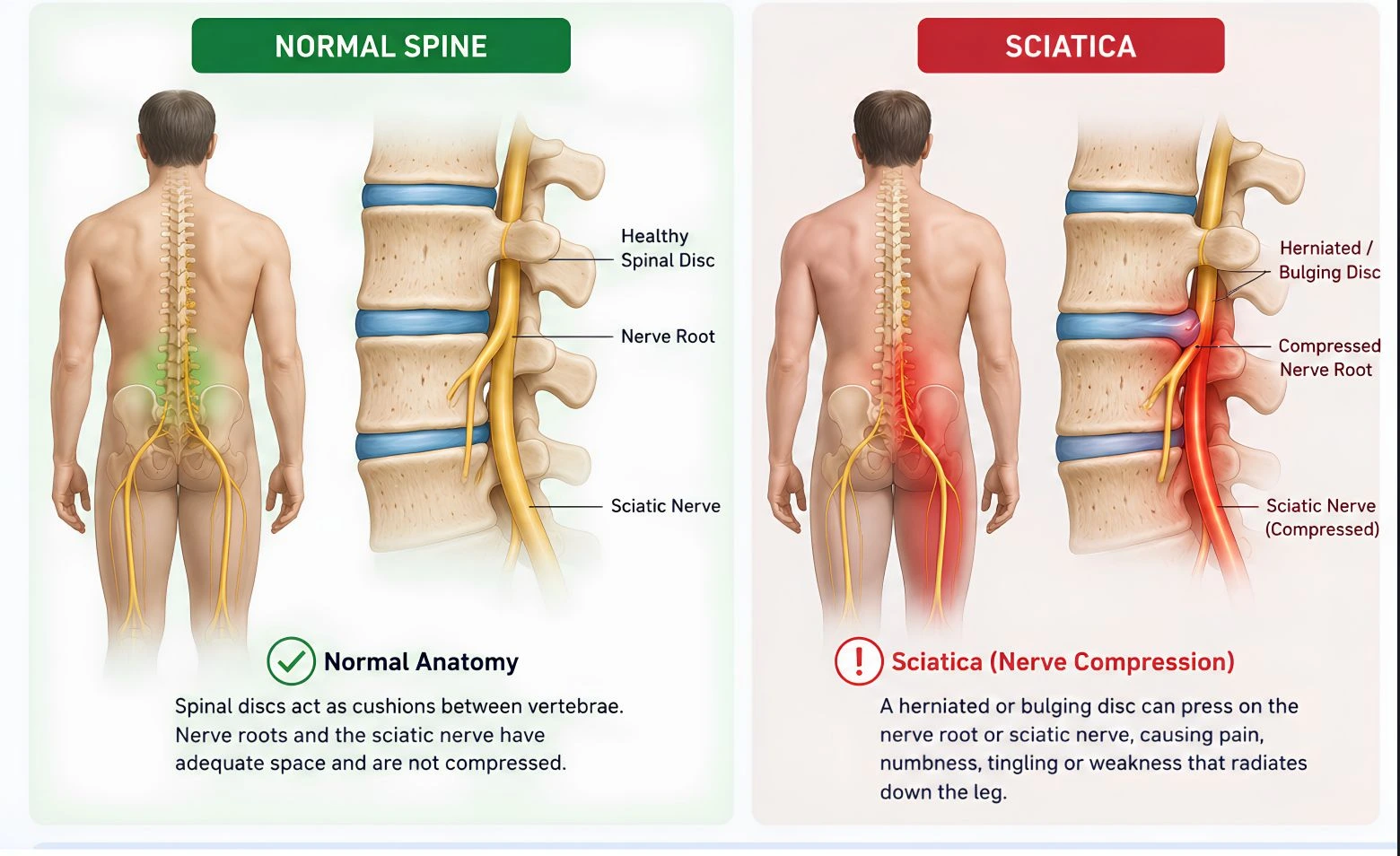
Expert Diagnosis and Personalised Treatment for Sciatica by Spine Surgeon Dr Satyen Mehta
Spine Surgeon | 25+ Years of Experience | Consultation Locations: Chembur | Khar | Mulund
Sciatica is one of the most common causes of pain that radiates from the lower back into the buttock and down the leg. Although many people think sciatica is a disease, it is actually a symptom caused by irritation or compression of the sciatic nerve or the spinal nerve roots that form it. The condition may develop due to a slipped disc, lumbar spinal stenosis, degenerative changes in the spine, spondylolisthesis, or other disorders affecting the lower back.
The severity of sciatica varies from person to person. Some experience mild discomfort that settles with conservative treatment, while others develop persistent leg pain, numbness, tingling or muscle weakness that affects daily activities. Identifying the exact cause of nerve compression is essential because successful treatment depends on treating the underlying spinal condition rather than simply relieving pain.
Dr Satyen Mehta is a dedicated spine surgeon in Mumbai with over 25 years of experience in diagnosing and treating disorders of the cervical, thoracic and lumbar spine. Every patient undergoes a comprehensive clinical evaluation and detailed review of imaging before an individualised treatment plan is recommended. Depending on the diagnosis, treatment may include medications, physiotherapy, image-guided spinal injections, minimally invasive spine surgery or endoscopic spine surgery when clinically indicated.
What is a Sciatica?
Sciatica refers to pain that travels along the course of the sciatic nerve. It usually begins in the lower back or buttock and radiates into the back of the thigh, leg and sometimes the foot. The pain occurs because one or more spinal nerve roots become irritated or compressed before they combine to form the sciatic nerve.
It is important to understand that sciatica is not a diagnosis by itself. It is a symptom of an underlying spinal disorder. The most common cause is a lumbar slipped disc (lumbar disc herniation), but several other conditions can produce similar symptoms.
Depending on the affected nerve root, patients may experience:
- Pain radiating down one leg
- Burning or electric shock-like pain
- Tingling or pins-and-needles sensation
- Numbness in the foot or toes
- Muscle weakness
- Difficulty walking or standing for long periods
Most cases affect only one side of the body, although bilateral symptoms may occur in certain spinal conditions.
Early diagnosis helps identify the underlying cause and allows treatment to begin before prolonged nerve compression leads to persistent pain or neurological deficits.
Understanding the Sciatic Nerve
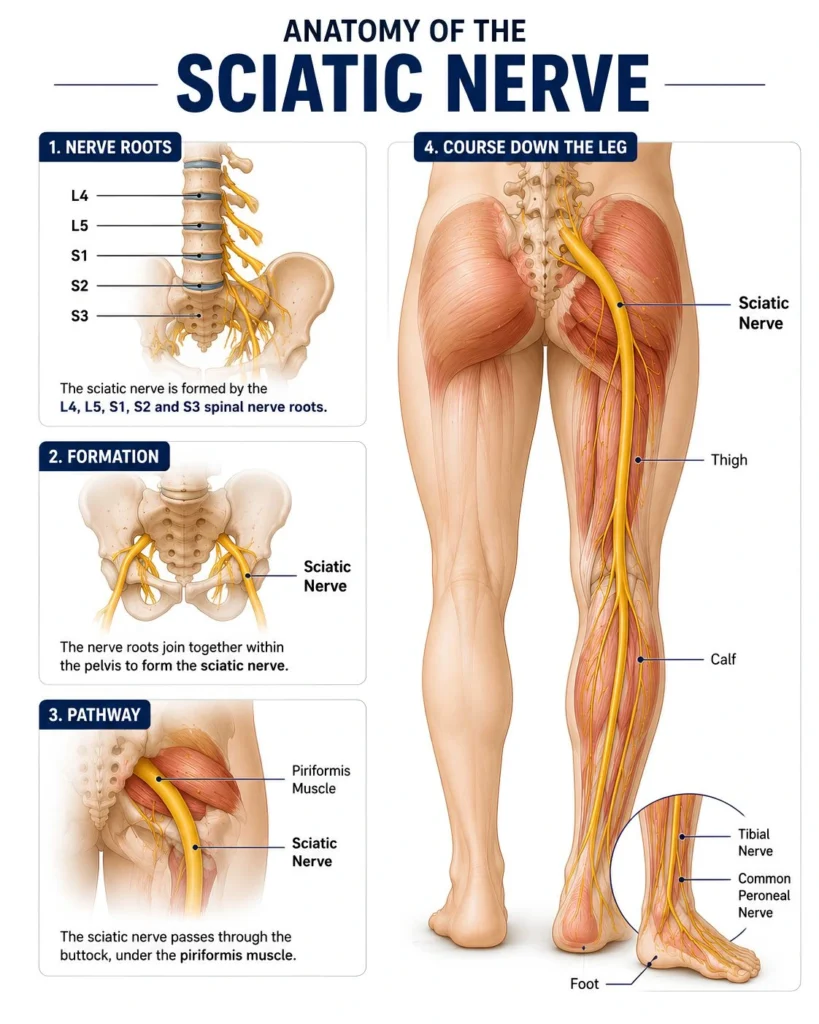
The sciatic nerve is the largest and longest nerve in the human body. It is formed by the L4, L5, S1, S2 and S3 spinal nerve roots, which emerge from the lower part of the spine and join together within the pelvis before passing through the buttock and down the back of each leg.
The sciatic nerve supplies sensation to much of the lower limb and controls several important muscles involved in standing, walking and foot movement.
When one of the spinal nerve roots becomes compressed inside the spine, inflammation develops around the nerve. This combination of pressure and inflammation produces the characteristic symptoms of sciatica.
Unlike ordinary lower back pain, sciatica follows the pathway of the affected nerve. This is why patients often describe pain travelling from the lower back into the buttock, thigh, calf or foot.
Understanding this nerve pathway is important because treatment focuses on relieving the source of nerve compression rather than simply masking the pain.
Symptoms of Sciatica
Sciatica symptoms depend on the location and severity of nerve compression. Some patients experience occasional discomfort, while others develop severe pain that interferes with walking, sleeping or everyday activities.
Common symptoms include:
- Pain radiating from the lower back into the buttock and down one leg
- Sharp, shooting or electric shock-like pain
- Burning pain along the course of the sciatic nerve
- Tingling or pins-and-needles sensation
- Numbness affecting the thigh, calf or foot
- Muscle weakness in the leg or foot
- Pain that worsens while sitting for prolonged periods
- Increased pain while coughing, sneezing or bending forward
- Difficulty standing or walking because of pain
The exact pattern of symptoms often helps determine which spinal nerve root is involved.
For example:
- L4 nerve root involvement may cause weakness while straightening the knee.
- L5 nerve root compression commonly affects lifting the foot or big toe.
- S1 nerve root compression may reduce ankle strength and alter the ankle reflex.
This clinical pattern, combined with physical examination and imaging, helps Dr Satyen Mehta identify the underlying spinal disorder responsible for the symptoms.
When Should You Consult a Spine Surgeon?
Many patients initially ignore leg pain, hoping it will resolve on its own. While mild sciatica often improves with appropriate conservative treatment, persistent symptoms should not be overlooked.
You should consult a spine specialist if you experience:
- Sciatica lasting more than a few weeks
- Severe pain that limits daily activities
- Recurrent episodes of leg pain
- Numbness or tingling that continues to worsen
- Difficulty walking because of weakness
- Persistent pain despite medication or physiotherapy
- Symptoms affecting work, sleep or quality of life
Early evaluation helps identify the underlying cause before prolonged nerve compression results in permanent nerve damage.
Sciatica Symptoms Requiring Immediate Medical Attention
Although uncommon, certain symptoms require urgent assessment by a spine surgeon because they may indicate significant nerve compression.
Seek immediate medical attention if you develop:
- Progressive weakness in the leg or foot
- Foot drop
- Loss of bladder or bowel control
- Numbness around the groin or inner thighs (saddle anaesthesia)
- Severe pain following significant spinal trauma
- Rapidly worsening neurological symptoms
These signs may indicate Cauda Equina Syndrome or severe nerve compression requiring urgent surgical evaluation.
Prompt diagnosis and timely treatment are essential to maximise the chances of neurological recovery and prevent permanent complications.
What Causes Sciatica?
Sciatica is not a condition in itself but a symptom caused by irritation or compression of the sciatic nerve or the spinal nerve roots. Identifying the underlying cause is essential because treatment is directed towards correcting the source of nerve compression rather than simply relieving pain.
The most common causes of sciatica include:
Lumbar Slipped Disc (Lumbar Disc Herniation)
A slipped disc is the leading cause of sciatica, particularly in younger and middle-aged adults. The soft inner portion of the intervertebral disc protrudes through the outer layer and compresses a nearby nerve root, resulting in pain radiating down the leg.
Lumbar Spinal Stenosis
Spinal stenosis refers to narrowing of the spinal canal. As the available space decreases, the nerves become compressed, leading to leg pain, numbness and difficulty walking. This is more commonly seen in older adults.
Degenerative Disc Disease
Age-related wear and tear can reduce the height and flexibility of the spinal discs. Degenerative changes may contribute to inflammation, instability and nerve compression.
Spondylolisthesis
This condition occurs when one vertebra slips forward over the one below it. The resulting instability can narrow the spinal canal or nerve exit pathways and produce symptoms of sciatica.
Foraminal Stenosis
The spinal nerves leave the spine through small openings called neural foramina. Narrowing of these openings may compress the exiting nerve root and produce leg pain.
Less Common Causes
Although uncommon, sciatica may also result from:
- Spinal infections
- Spinal tumours
- Traumatic spinal injuries
- Post-operative scar tissue
- Certain inflammatory disorders
A thorough clinical evaluation helps determine the exact cause so that treatment can be appropriately tailored.
Risk Factors for Sciatica
Several factors increase the likelihood of developing sciatica. While some cannot be modified, many lifestyle-related risk factors can be addressed to reduce the risk of recurrent episodes.
These include:
- Increasing age
- Occupations involving prolonged sitting or driving
- Repetitive bending or heavy lifting
- Obesity
- Sedentary lifestyle
- Poor posture
- Smoking
- Diabetes
- Weak core muscles
- Previous spinal injury
Addressing these factors forms an important part of long-term treatment and prevention.
How is Sciatica Diagnosed?
An accurate diagnosis begins with understanding why the sciatic nerve is being compressed. Many conditions affecting the hip, pelvis, blood vessels and peripheral nerves can produce symptoms similar to sciatica. Therefore, diagnosis should never rely on symptoms or MRI findings alone.
Dr Satyen Mehta follows a systematic approach to identify the underlying cause of sciatic nerve pain before recommending treatment.
Medical History
During your consultation, several important questions help narrow down the diagnosis:
- When did the pain begin?
- Does the pain travel below the knee?
- Which activities worsen the symptoms?
- Is there numbness or weakness?
- Have you experienced similar episodes before?
- Have medications or physiotherapy provided relief?
- Does the pain interfere with work, walking or sleep?
Understanding the pattern of symptoms often provides valuable clues about the affected nerve root.
Physical Examination
A detailed neurological examination is an essential part of evaluating sciatica.
Dr Satyen Mehta assesses:
- Walking pattern (gait)
- Posture
- Spinal movement
- Muscle strength
- Reflexes
- Sensation in the lower limbs
- Straight Leg Raise (SLR) Test
- Crossed Straight Leg Raise Test
- Nerve tension signs
In many patients, the clinical examination helps identify the affected spinal level even before imaging studies are reviewed.
MRI Scan
MRI is the most useful investigation for evaluating persistent sciatica because it provides detailed images of the spinal discs, nerves and surrounding soft tissues.
An MRI can identify:
- Slipped disc
- Nerve root compression
- Lumbar spinal stenosis
- Degenerative disc disease
- Foraminal stenosis
- Other spinal abnormalities
MRI findings are always interpreted in conjunction with the patient’s symptoms and clinical examination.
X-rays
Although X-rays cannot directly diagnose sciatica, they provide useful information about:
- Spinal alignment
- Degenerative changes
- Spondylolisthesis
- Fractures
- Spinal deformity
CT Scan
A CT scan may be recommended when MRI cannot be performed or when more detailed information about the bony anatomy is required.
Electromyography (EMG) and Nerve Conduction Studies
These specialised investigations may be advised in selected patients when the diagnosis remains uncertain or when distinguishing spinal nerve compression from peripheral nerve disorders.
Do All Patients with Sciatica Need an MRI?
No.
One of the most common misconceptions is that every patient with sciatica requires an immediate MRI scan.
Many patients with recent-onset sciatica improve with conservative treatment and may not require advanced imaging initially.
An MRI is generally recommended when:
- Symptoms persist despite appropriate treatment.
- Significant muscle weakness develops.
- Surgery is being considered.
- The diagnosis remains uncertain.
- Red flag symptoms are present.
It is equally important to understand that MRI findings alone do not determine treatment. Many people without pain have disc bulges or age-related changes visible on MRI.
Treatment decisions are based on three equally important factors:
- Clinical symptoms
- Physical examination
- Imaging findings
Only when these correlate is a treatment plan recommended.
Can Sciatica Heal Without Surgery?
Yes.
The majority of patients with sciatica improve without surgery.
In many cases, inflammation around the affected nerve gradually settles, and the body naturally absorbs part of the herniated disc over time. As pressure on the nerve decreases, symptoms begin to improve.
Conservative treatment remains the first line of management for most patients unless there is progressive neurological weakness or another urgent indication for surgery.
Recovery may include:
- Activity modification
- Medication
- Physiotherapy
- Core strengthening
- Lifestyle modification
- Image-guided spinal injections where appropriate
Every patient recovers at a different pace. Some improve within a few weeks, while others require a longer rehabilitation programme depending on the underlying spinal condition.
Sciatica Treatment Options
Treatment for sciatica aims to relieve pain, reduce nerve inflammation, restore mobility and address the underlying cause of nerve compression. Since sciatica is a symptom rather than a disease, treatment varies depending on the condition responsible for the nerve irritation.
For most patients, treatment begins with conservative measures. Surgery is considered only when symptoms persist despite appropriate non-surgical management or when there is significant neurological compromise.
Non-Surgical Treatment for Sciatica
The majority of patients with sciatica improve without surgery. Conservative treatment is usually recommended during the initial phase unless there are red flag symptoms requiring urgent intervention.
Activity Modification
Complete bed rest is no longer recommended for most patients with sciatica. Gentle movement and gradual return to normal daily activities often promote recovery better than prolonged inactivity.
Patients are advised to:
- Avoid activities that significantly aggravate pain.
- Avoid prolonged sitting without breaks.
- Continue walking within comfortable limits.
- Modify lifting techniques.
- Maintain good posture during work and daily activities.
The objective is to remain active while avoiding excessive strain on the affected spinal segment.
Medications
Medications may help reduce inflammation and control pain during the acute phase of sciatica.
Depending on the clinical condition, treatment may include:
- Anti-inflammatory medications
- Pain-relieving medications
- Muscle relaxants
- Medications for nerve-related pain
Medication should always be prescribed after medical evaluation and used under appropriate supervision.
Physiotherapy
Physiotherapy plays an important role in relieving symptoms and restoring spinal function.
Following assessment, an individualised rehabilitation programme may include:
- Core strengthening exercises
- Hamstring and hip flexibility exercises
- Nerve mobilisation techniques
- Lumbar stabilisation exercises
- Posture correction
- Gait training
- Ergonomic advice
The exercise programme is modified according to the patient’s symptoms, diagnosis and stage of recovery.
Lifestyle Modification
Long-term recovery depends not only on pain relief but also on addressing factors that contribute to recurrent nerve compression.
Patients are encouraged to:
- Maintain a healthy body weight.
- Improve workplace ergonomics.
- Strengthen core muscles.
- Avoid smoking.
- Stay physically active.
- Practise safe lifting techniques.
These measures reduce stress on the lumbar spine and help minimise future episodes.
Image-Guided Spine Injections for Sciatica
Some patients continue to experience severe leg pain despite medication and physiotherapy. In selected cases, image-guided spinal injections may help reduce inflammation around the compressed nerve root and provide meaningful pain relief.
These procedures are performed under imaging guidance to improve precision and safety.
Commonly used procedures include:
Epidural Steroid Injection
Medication is delivered around the affected nerve root to reduce inflammation and relieve pain.
This treatment may help patients:
- Reduce severe leg pain
- Improve mobility
- Participate more effectively in physiotherapy
- Delay or avoid surgery in selected cases
Selective Nerve Root Block
A targeted injection around a specific nerve root may be used when the exact source of symptoms needs confirmation or when localised pain relief is required.
It is important to understand that spinal injections relieve inflammation around the nerve but do not remove a slipped disc or correct structural spinal abnormalities. They are most effective when combined with a comprehensive rehabilitation programme.
When is Surgery Recommended for Sciatica?
Although surgery is often perceived as the final treatment option, only a small proportion of patients with sciatica ultimately require an operation.
Surgery may be considered when:
- Leg pain persists despite adequate conservative treatment.
- Significant muscle weakness develops.
- Progressive neurological deficits are present.
- MRI confirms persistent nerve compression that correlates with clinical findings.
- Walking becomes increasingly difficult due to nerve compression.
- Symptoms significantly affect quality of life despite non-surgical treatment.
- Cauda Equina Syndrome or other emergency neurological conditions develop.
The purpose of surgery is to relieve pressure on the affected nerve and restore neurological function while preserving as much normal spinal anatomy as possible.
Surgical Options for Sciatica
The choice of procedure depends on the underlying spinal condition rather than the symptom of sciatica itself. Dr Satyen Mehta recommends surgery only after careful clinical evaluation and when it is expected to provide meaningful benefit.
Endoscopic Spine Surgery
Endoscopic spine surgery allows selected patients with lumbar disc herniation to be treated through a very small incision using specialised endoscopic equipment.
Potential advantages include:
- Smaller skin incision
- Minimal muscle disruption
- Reduced blood loss
- Less post-operative pain
- Early mobilisation
- Faster recovery in appropriately selected patients
This technique is suitable only for carefully selected cases after detailed clinical and radiological evaluation.
Minimally Invasive Spine Surgery
Some patients with sciatica caused by spinal stenosis, instability or other complex spinal disorders may benefit from minimally invasive spine surgery (MISS).
Compared with conventional open surgery, MISS aims to minimise soft tissue disruption while achieving the same surgical objective.
Advantages may include:
- Smaller incisions
- Reduced muscle injury
- Less blood loss
- Shorter hospital stay
- Earlier return to routine activities
The choice between endoscopic surgery, minimally invasive techniques and conventional procedures depends entirely on the underlying diagnosis and the patient’s individual requirements.
Microdiscectomy
Microdiscectomy remains one of the most effective procedures for treating sciatica caused by a lumbar slipped disc when conservative treatment has not been successful.
Using magnification and specialised microsurgical instruments, the herniated portion of the disc compressing the nerve is removed while preserving surrounding tissues.
Recovery After Sciatica Treatment
Recovery varies depending on the cause of sciatica, the severity of nerve compression and the treatment received.
Recovery Following Conservative Treatment
Many patients begin noticing gradual improvement within several weeks.
Recovery focuses on:
- Pain reduction
- Improved mobility
- Restoration of muscle strength
- Return to normal activities
- Prevention of recurrence
A structured physiotherapy programme often forms an important part of rehabilitation.
Recovery Following Surgery
Patients undergoing endoscopic or minimally invasive spine surgery are generally encouraged to begin walking soon after the procedure, depending on the type of surgery performed.
Recovery commonly includes:
- Early mobilisation
- Progressive increase in daily activities
- Physiotherapy when indicated
- Gradual return to work
- Ongoing strengthening exercises
The recovery timeline varies according to the underlying spinal disorder, surgical procedure and individual healing response.
Prevention
Can Sciatica Be Prevented?
Although not every case of sciatica can be prevented, adopting healthy spinal habits can significantly reduce the risk of developing recurrent symptoms.
Preventive measures include:
- Maintaining good posture
- Exercising regularly
- Strengthening the core muscles
- Avoiding prolonged sitting
- Maintaining a healthy body weight
- Using proper lifting techniques
- Stopping smoking
- Seeking early medical advice for persistent back or leg pain
Small lifestyle changes often have a significant impact on long-term spinal health.
Living with Sciatica
Most patients with sciatica recover successfully with appropriate treatment and rehabilitation. However, recovery requires active participation from the patient as well as guidance from an experienced spine specialist.
Long-term management focuses on:
- Following the prescribed treatment plan
- Remaining physically active within comfortable limits
- Continuing strengthening exercises
- Maintaining healthy body weight
- Improving workplace ergonomics
- Attending scheduled follow-up appointments
For patients with persistent or recurrent symptoms, timely reassessment helps identify whether the underlying spinal condition has progressed and whether additional treatment may be required.
With an accurate diagnosis, evidence-based treatment and structured rehabilitation, the majority of patients can return to their normal work, recreational activities and daily routine with significant improvement in pain and function.
Why Choose Dr Satyen Mehta for Sciatica Treatment in Mumbai?
Choosing the right spine surgeon is one of the most important decisions when persistent sciatica affects your quality of life. Successful treatment depends not only on relieving pain but also on accurately identifying the underlying cause of nerve compression and recommending the most appropriate treatment for each individual patient.
With over 25 years of exclusive experience in spine surgery, Dr Satyen Mehta specialises in the diagnosis and treatment of disorders affecting the cervical, thoracic and lumbar spine. His practice is dedicated solely to spinal conditions, allowing him to provide comprehensive care for patients suffering from sciatica, slipped discs, spinal stenosis, spondylolisthesis, spinal deformities, fractures and other complex spinal disorders.
International Training and Academic Excellence
Dr Satyen Mehta is a Gold Medalist in M.S. Orthopaedics and a Member of the Royal College of Surgeons (MRCS), Glasgow, United Kingdom.
His advanced spine training includes:
- Fellowship in Spinal Deformity and Paediatric Spine Surgery at Korea University Guro Hospital, Seoul, South Korea.
- International clinical experience at Princess Alexandra Hospital, Brisbane, Australia.
- Advanced training in Minimally Invasive Spine Surgery and modern spinal techniques.
His international exposure enables him to combine evidence-based decision making with contemporary surgical technology while maintaining a patient-first approach.
Evidence-Based Treatment Philosophy
Every patient with sciatica is different.
Some patients recover with medication and physiotherapy alone.
Others benefit from image-guided spinal injections.
Only a small percentage require surgery.
Rather than recommending one treatment for everyone, Dr Satyen Mehta believes in selecting the least invasive treatment capable of providing the safest and most effective long-term outcome.
Surgery is recommended only when there is a clear clinical indication, persistent neurological symptoms or failure of appropriate conservative treatment.
Expertise in Modern Spine Surgery
When surgery becomes necessary, Dr Satyen Mehta offers advanced surgical techniques including:
- Endoscopic Spine Surgery
- Minimally Invasive Spine Surgery (MISS)
- Microscopic Spine Surgery
- Lumbar Decompression Procedures
- Microdiscectomy
- Spinal Fusion Surgery where indicated
The choice of surgical technique depends on the patient’s diagnosis, spinal anatomy and treatment goals rather than a one-size-fits-all approach.
Commitment to Research and Education
Dr Satyen Mehta actively contributes to spine research and postgraduate education.
His academic contributions include:
- Publications in international peer-reviewed journals.
- Presentations at national and international spine conferences.
- Training postgraduate orthopaedic surgeons.
- Conducting Spine Fellowship Programmes for young spine surgeons from India and neighbouring countries.
- Former Secretary of the Bombay Spine Society.
Remaining actively involved in research allows him to continually update his clinical practice and provide patients with modern, evidence-based treatment.
Consultation Locations
Chembur
Consultation for lower back pain, sciatica, slipped disc, spinal stenosis and other spinal conditions.
Khar
Comprehensive diagnosis and treatment planning for cervical and lumbar spine disorders.
Mulund
Advanced consultation with access to surgical care for complex spinal conditions.
Hospital Associations
- Fortis Hospital, Mulund
- S. L. Raheja Hospital, Mahim
FAQ
Frequently Asked Questions
What is the most common cause of sciatica?
The most common cause of sciatica is a lumbar slipped disc (lumbar disc herniation), where part of the disc presses on a spinal nerve root. Other causes include lumbar spinal stenosis, spondylolisthesis and degenerative spine disease.
Can sciatica heal without surgery?
Yes. Most patients improve with conservative treatment that may include medication, physiotherapy, activity modification and lifestyle changes. Surgery is recommended only when there is persistent nerve compression, progressive weakness or failure of non-surgical treatment.
How long does sciatica usually last?
Many patients experience improvement within a few weeks. Recovery depends on the underlying cause, severity of nerve compression and the treatment received. Persistent symptoms should be evaluated by a spine specialist.
Is walking good for sciatica?
In most cases, gentle walking is encouraged because it helps maintain mobility and promotes recovery. Activities should be performed within comfortable limits and modified if they significantly increase pain.
When should I see a spine surgeon for sciatica?
You should seek specialist evaluation if leg pain persists despite conservative treatment, if weakness develops, or if symptoms interfere with work, sleep or daily activities.
Is an MRI necessary for every patient with sciatica?
No. MRI is recommended when symptoms persist, neurological deficits develop or surgery is being considered. Treatment decisions are never based on MRI findings alone.
What is the difference between sciatica and a slipped disc?
Sciatica is a symptom caused by irritation or compression of the sciatic nerve. A slipped disc is one of the most common conditions that can cause sciatica.
What happens if sciatica is left untreated?
Persistent nerve compression may lead to chronic pain, muscle weakness or permanent nerve damage in some patients. Early diagnosis improves the likelihood of successful treatment.
Is endoscopic spine surgery suitable for all patients with sciatica?
No. Endoscopic spine surgery is highly effective for carefully selected patients but is not appropriate for every spinal condition. The choice of treatment depends on the underlying diagnosis and clinical evaluation.
How can I prevent recurrent sciatica?
Maintaining a healthy body weight, strengthening your core muscles, practising good posture, staying physically active and using proper lifting techniques can reduce the risk of recurrence.
Can physiotherapy cure sciatica?
Physiotherapy is an important part of treatment and helps many patients recover without surgery. However, if significant nerve compression persists, additional treatments may be required.
How do I know if my sciatica is becoming serious?
Progressive weakness, foot drop, increasing numbness, loss of bladder or bowel control, or severe worsening pain require immediate medical evaluation.
Book a Consultation
If you have persistent back pain, neck pain, sciatica, numbness, tingling or weakness that may be related to a slipped disc, consult Dr Satyen Mehta for a comprehensive evaluation and personalised treatment plan. Early diagnosis and timely management can help relieve symptoms, restore function and prevent long-term complications.
Centers